How to Design a Metal Badge That Represents Your Brand Perfectly?
A great quality metal badge is more than jewelry, it’s a vital branding tool that represents your identity, authenticity & professionalism on the market. If you are a business wanting to get noticed, fashion product that needs to stand out or an organisation needing a uniform look, your métal badge should convey accurately the personality of your brand.
We walk you through the need to know about everything—badges shapes, finishes, engraving styles and branding techniques—answering all those burning questions – how do I design a badge?, what is good for a badge?, what software should I use? that have been plaguing mankind since the invention of digital art.
For professional bespoke metal badge options, check out Abaya Logo
The Importance of Metal Badges for Branding
Metal badges are an effective, hard-wearing and eye-catching way of promoting your brand. Whether on attire, merchandise or labels and packaging for your products – a metal badge instantly raises the profile, increases perceived value and takes your identity with it.
If you want to make quality custom badges for your company, take a look over here: Abaya Logo Metal Badges
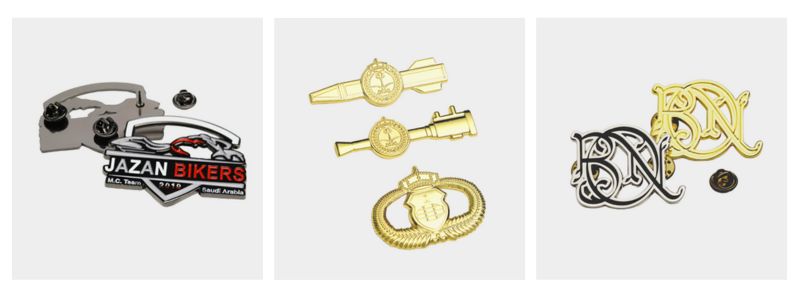
How do I design my own badge?
First things first, when it comes to designing your badge yourself: knowing your brand and visual identity. Here’s a simplified process:
1. Define Your Brand Message
Ask yourself:
• What story will the badge tell about your brand?
• Should it be luxurious, adventurous, spare, playful or traditional?
• This clarity informs all creative decision-making.
2. Choose the Right Shape
• There are also different types of metal badges:
• Round badges—classic and balanced
• Square/rectangular—professional and structured
Special Shape: Any special outline can be printed (perfect for making sure your image stands out or for promoting a logo/mascot).
3. Oval—elegant and smooth
Your shape needs to tie back into your logo and what you stand for. For instance, when it comes to fashion brands using modern custom-cut shapes that blend perfectly with the aesthetics of the garment.
• Select the Material and Finish
• The end determines the overall appearance. Popular options include:
• Gold-plated for luxury and prestige
• Silver or chrome for a fresh and modern feel
• Antique bronze for that vintage look and feel
• Matte black for bold minimalism
• Brushed metal for premium texture
When looking through the finish and option section, you can visit us at Nottingham-Banners or Abaya Logo to see our professional samples.
.
4. Decide on Engraving Style
• Engraving is what brings your design to life. Main engraving styles include:
• Laser Engraved- clean crisp markings, modern looking
• Intaglio – best for heavy lines and enduring images
• Debossing/embossing, – adds height and texture
• 3-Etching – great to give a different level and quality feeling
Select the one that closest fits your logo or graphic without being cropped off or causing it to be indistinct.
5. Add Color (Optional)
A lot of brands tend to go for classic metal-only badges, but adding in some colors using enamel or epoxy can help bring more attention to key design details or unify your brand palette.
6. Finalise and Export Your Design
When you’ve finished designing, export it in high-res file formats, including PNG, SVG and PDF so manufacturers know exactly what to produce.
And if you’re not sure or need HELP, contact me easily via the Abaya Logo Contact Page
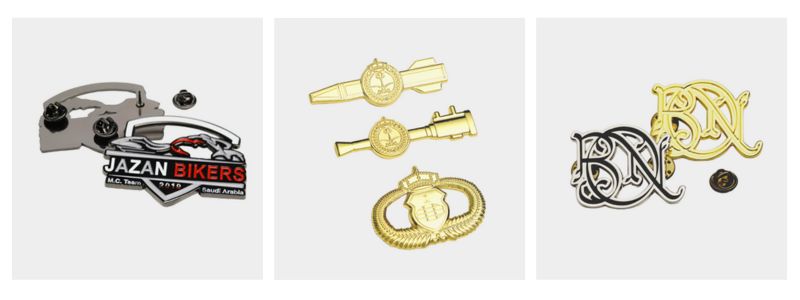
What Makes a Good Badge?
A nice badge is one that has a series of good looks and able to 5 effectively pass on your brand name. Here’s what makes a quality badge:
✔ Clear Branding: Your logo should be recognisable at a glance. Skip any kind of dense designs, or many small patterns.
✔ High Contrast: Contrast Whether color, texture or engraving depth, contrast maintains the readability and visual appeal of your design.
✔ Appropriate Size: Badges should sit perfectly on clothes or items, without taking over them or disappearing. Normal sizes are 20mm – 50mm for different applications.
✔ Premium Finish: The finish should reflect your brand’s tone — luxury brands usually go for a matte gold, while tech companies pick brushed steel or gunmetal.
✔ Durability: High-quality materials and secure fastening choices (clutch, safety pin or magnet) make sure the badge is durable.
A badge that is of good appearance and long lasting enhances the confidence in your brand.

What Is the Best Software for Designing Badges?
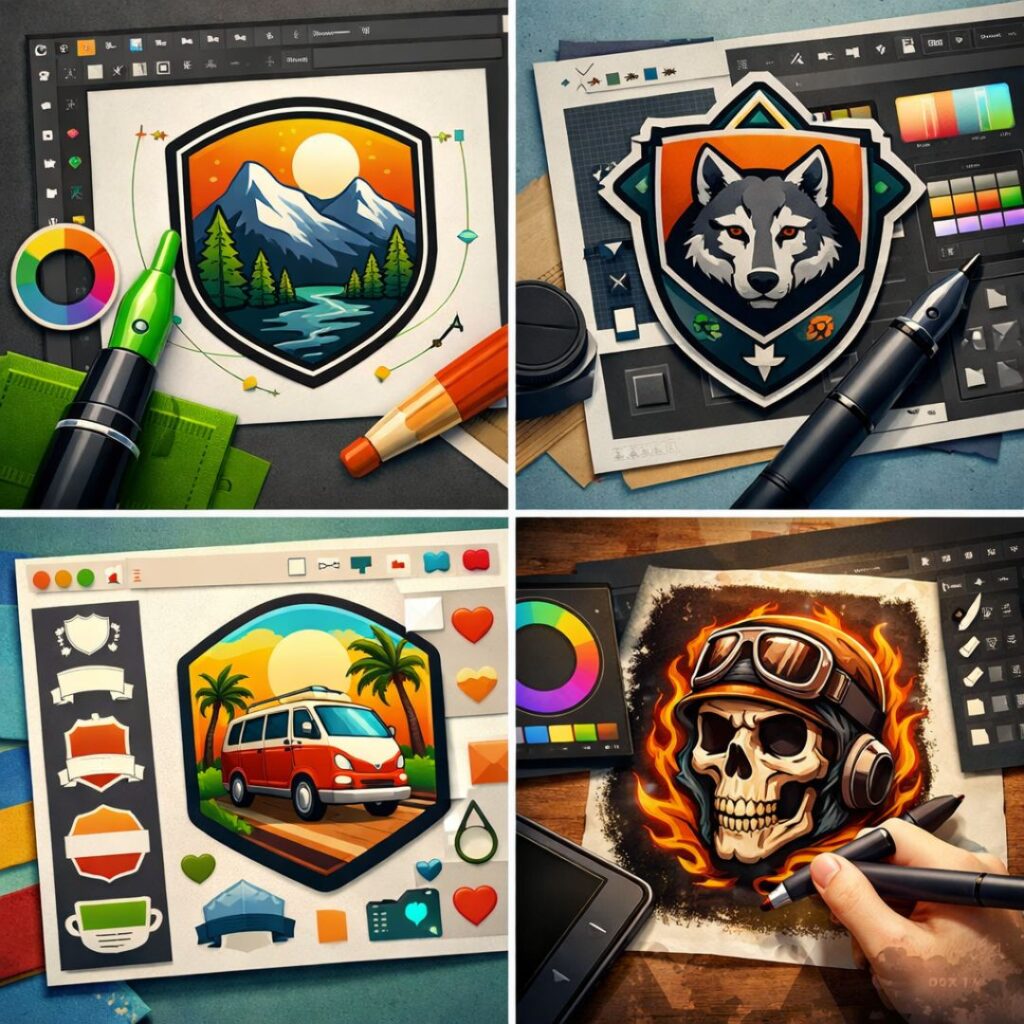
High-quality badge designs are generally produced with the aid of graphic design software. Here are the top options:
Adobe Illustrator
Most common for badge design. It gives you tools to work with vectors and create sharp, scalable designs that manufacturers need.
1. CorelDRAW: For engraving and printing use. Excellent for design and vector work.
2. Affinity Designer: A cheaper version of Illustrator with great vector tools.
3. Canva (Beginner-Friendly): Fine for simple designs but not great if you want to get intricate with your etching layout. Helpful if you’re brand new with limited experience.
4. Procreate (for Artistic Badge Designs): If you are creating badges that are on pages in a more hand-drawn or illustrative style, Procreate is brilliant – just be sure to export high resolution.
For final production, make sure to vectorize your design (SVG or EPS).
How to Design a Badge in Art?
In addition to a normal logo layout, designing a badge is something you design artistically. Here’s how to approach it:
1. Start with Sketches: Loose drawing and sketching allows you to play with shapes, patterns,characters or ornaments. This is particularly helpful for badges depicting drawings or symbols.
2. Focus on Balance: Even artistic badges require symmetry or visual calm. Avoid having your details get too cluttered.
3. Embrace Style: Badges are stylizable in many different ways:
• Minimal line art
• Vintage emblems
• Cartoon-style mascots
• Floral ornamental designs
• Geometric patterns
• Select a style that reflects your brand.
4. Transfer to Digital Format: Digitise the design (The app is amazing, you can use either Adobe Illustrator or Affinity Designer to get tidy lines and proper colours and proportions)
5. Simplify for Engraving: Metal badges need strong lines and the over-all shape cast in solid—too many hairy, fine lines may not engrave well. Keep it simple, but don’t let go of your artistic vision.